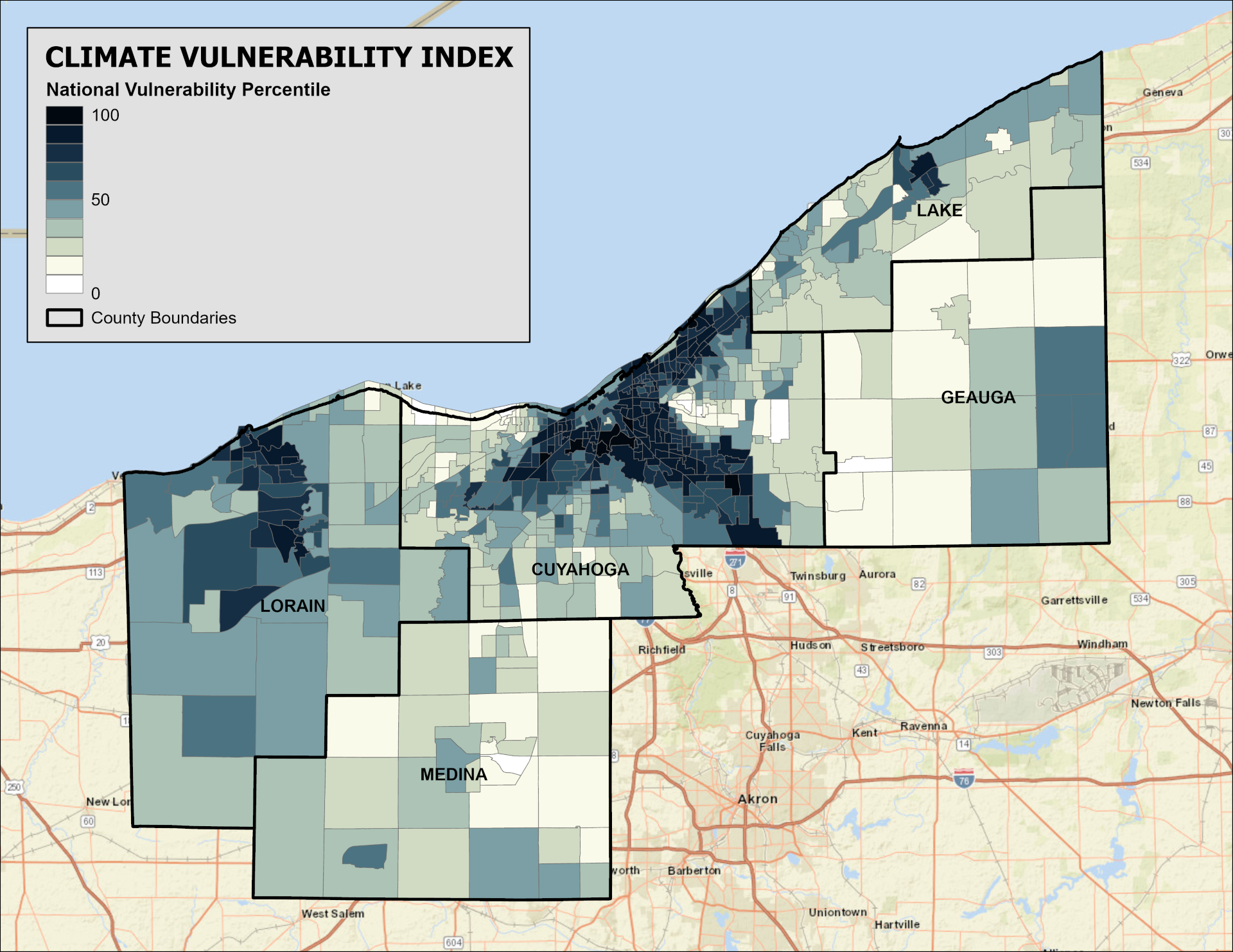
Between 82% and 99% of the benefits from cleaner air will happen in climate-vulnerable communities.

Reducing air pollution means fewer cases of asthma, heart disease, and lung problems for the people who have suffered the most in the past.
Incentive programs help residents upgrade their homes with better insulation and modern appliances, lowering energy costs.

Planting trees and expanding parks provides natural shade and cooler air. This protects residents from extreme summer heat and provides the health benefits of spending time outdoors.
Our region faces an urgent need to reduce pollution to protect communities and the environment, but this challenge is also a tremendous opportunity. By taking bold, coordinated action across energy, transportation, waste, and industry, while centering equity and community engagement, we can build a cleaner, healthier, and more resilient future for all residents.
Explore the full Cleveland Climate Action Plan (CCAP) and its Implementation Playbook to access current data, navigate challenges and solutions, learn how to lead your community toward a cleaner and more equitable future. (See last page of this document)