Extreme Heat: up to 52 days above 95°F and 52 warm nights by 2100
Heavy Rain & Flooding: the biggest storms are dropping more water, increasing flash flood risk
Severe Summer Storms: 255 storms causing $12.9M in property damage from 2014–2023
Poor Air Quality: ozone and fine particle pollution are worsening under climate change
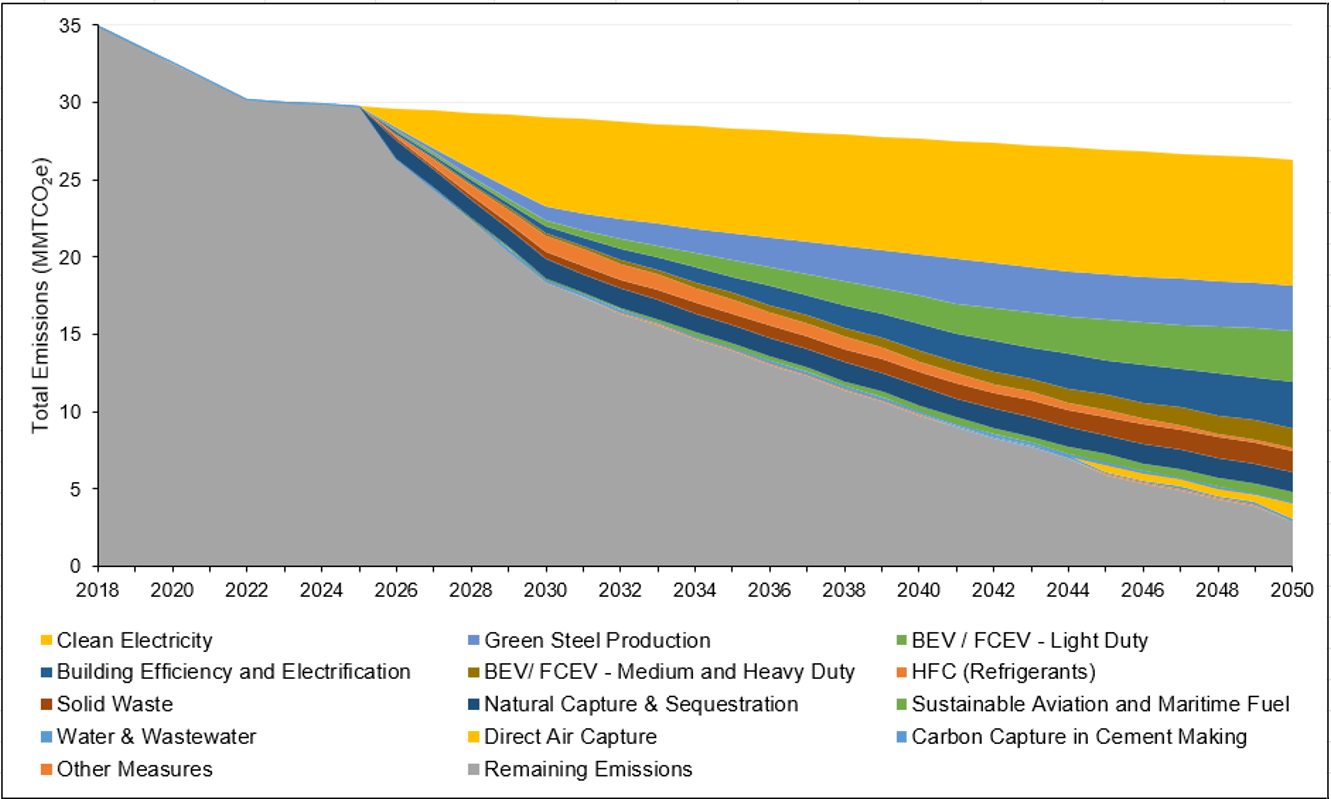
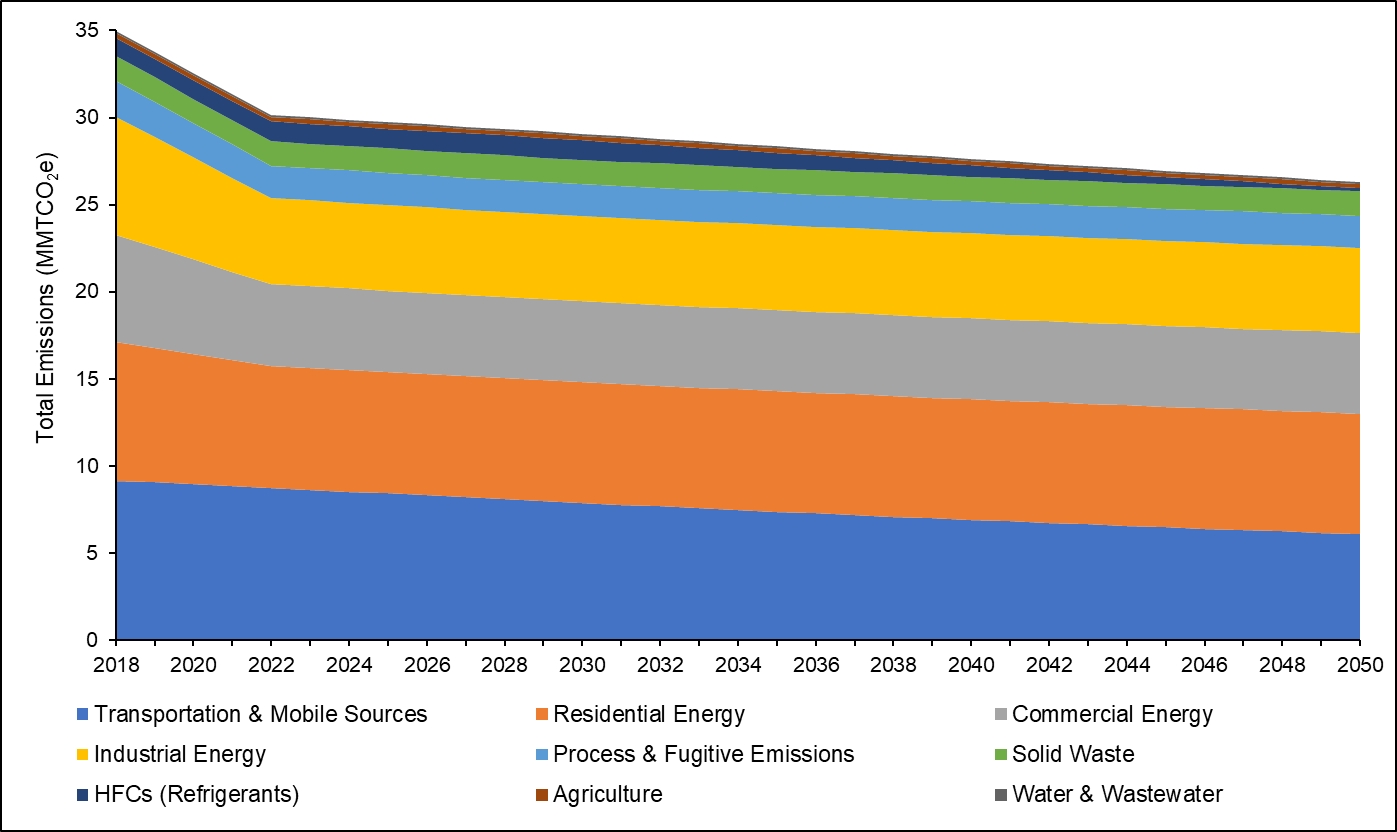
Yes, but most of the progress so far comes from cleaner electricity across our grid, not from changes in how we travel, build, or produce goods. We will need to continue to decarbonize, or reduce the emissions of climate pollution from our economy.
Our current progress is not enough. If the region keeps going as it is now, without new policies or investments, climate pollution will stop decreasing and level off. Most of the remaining pollution comes from how buildings are heated, how people travel, and move around, and how industry produces goods, and these systems do not change quickly on their own.
| COUNTY | 2030 ESTIMATED ANNUAL COST ($ BIILLION) | 2040 ESTIMATED ANNUAL COST ($ BIILLION) | 2050 ESTIMATED ANNUAL COST ($ BIILLION) | 2023-2050 ESTIMATED ANNUAL COST ($ BIILLION) |
| CUYAHOGA | $ 4.1 | $ 3.7 | $ 3.3 | $ 108.1 |
| GEAUGA | $ 0.3 | $ 0.3 | $ 0.3 | $ 7.5 |
| LAKE | $ 0.7 | $ 0.7 | $ 0.7 | $ 19.1 |
| LORAIN | $ 0.8 | $ 0.7 | $ 0.7 | $ 20.9 |
| MEDINA | $ 0.5 | $ 0.5 | $ 0.5 | $ 14.4 |
| TOTAL MSA | $ 6.5 | $ 5.9 | $ 5.3 | $ 170 |
Climate inaction could cost the region about $170 billion due to impacts like extreme weather, losst productivity, and damage to infrastructure.